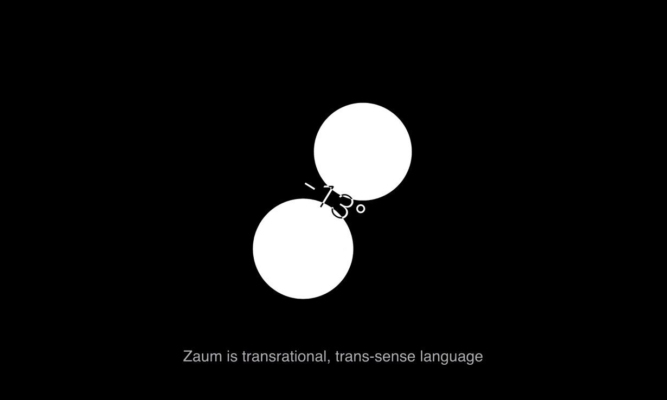
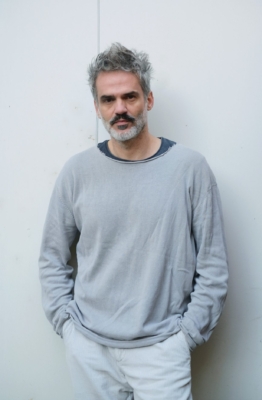
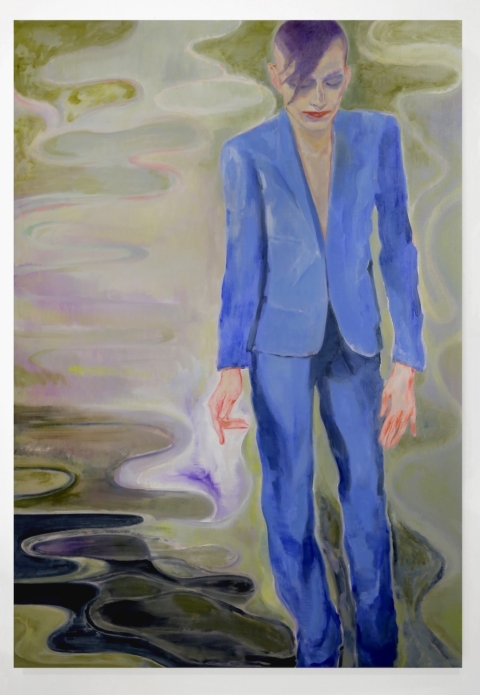
The Albanian Pavilion at the 61st Venice Biennale presents 'A Place in the Sun', a moving image installation by Albanian artist Genti Korini, curated by Polish curator and art critic Małgorzata Ludwisiak.
Within the three-channel video work, live acting, puppetry, animation and an original sonice score converge to from a fictional theater staged in Zaum. The transnational experimental language was developed by Russian Futurist poets in the early 20th century. Zaum was created as a pure language without any grammar and syntax rules, meant to decompose the social order.
The artist uses the irrationality of Zaum to take the viewer to the limits of language, and beyond the possibility of communication, to allow them to create a space where anything can be said anew. On the one hand, the exhibition diagnoses Albania as a 'somewhere place,' invariably defined by external and internal projections about it. On the other hand, it becomes a poetic expression of all invisible cultures, minor languages, and the unknown. The main point of reference for the artist is a 'Bloodless Murder' magazine and its 'Albanian Issue' (1916), published by an avant-garde group based in Petrograd (today Saint Petersburg). This magazine satirized the nationalistic and imperial pretensions of pre-revolutionary Russia, portraying Albania through a prism of exoticism and orientalist fantasy.
Within the colonial gaze presented in Albanian Issue, Albania emerges simultaneously as a romanticized frontier and as a stage for civilizational hierarchies, revealing more about the anxieties and ambitions of its foreign observers than about the country itself.